
How to Watch the Birds That Are Watching You
For resources and a gallery of "my" birds and their preferred foods, scroll to end.
In my new video, Watch the Birds Watching You? , I show how to observe, attract, and enjoy backyard birds. You’ll discover succulents that invite birds, best seed mixes (and which to avoid), and simple ways to provide water and shelter.
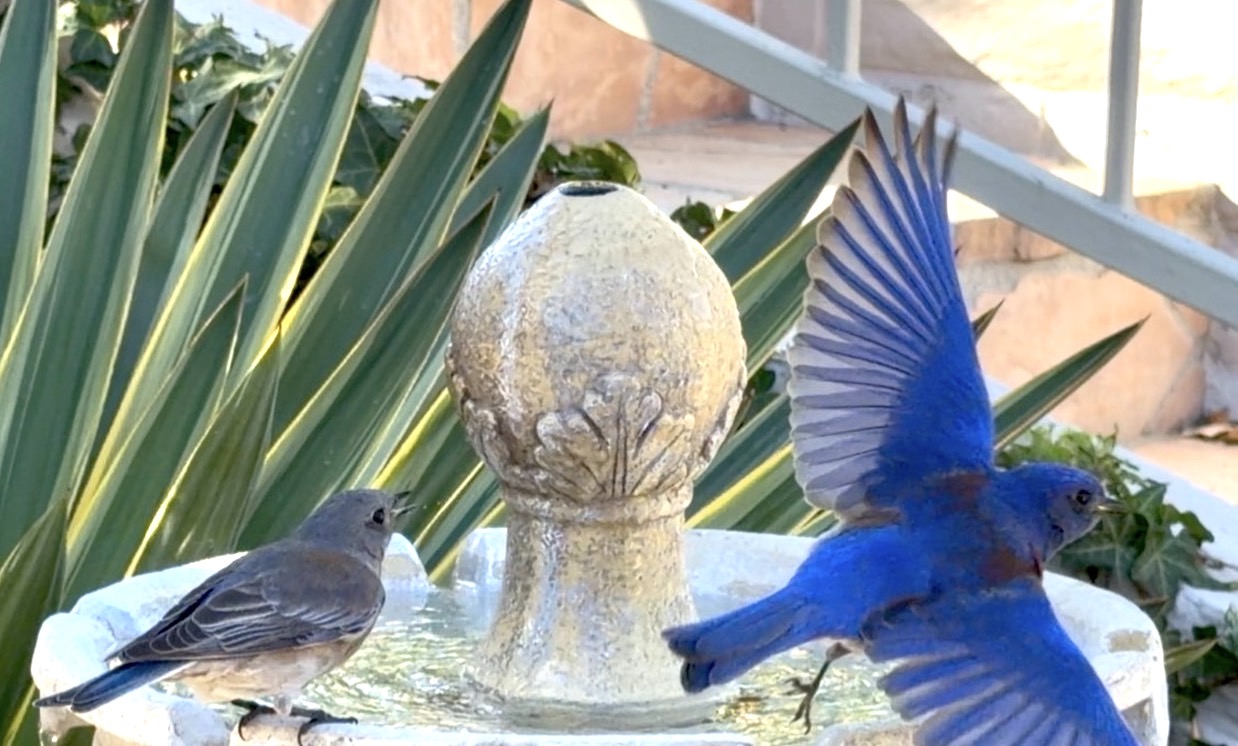
Right: Male bluebird in flight. At left is a female. They're attracted to moving water.
I'm in the foothills northeast of San Diego, but regardless of where you live, you can achieve something similar. Wild birds are everywhere! And even common ones are marvelous---"common" doesn't mean boring.
In the video and on this page I share a decade of firsthand experience attracting and observing over a dozen birds common to Southern California and beyond: finches, bluebirds, hummingbirds, orioles, woodpeckers, wrens, quail, doves, grosbeaks, titmice, nuthatches, jays, munias, and more—all in my waterwise, succulent-stuffed garden.
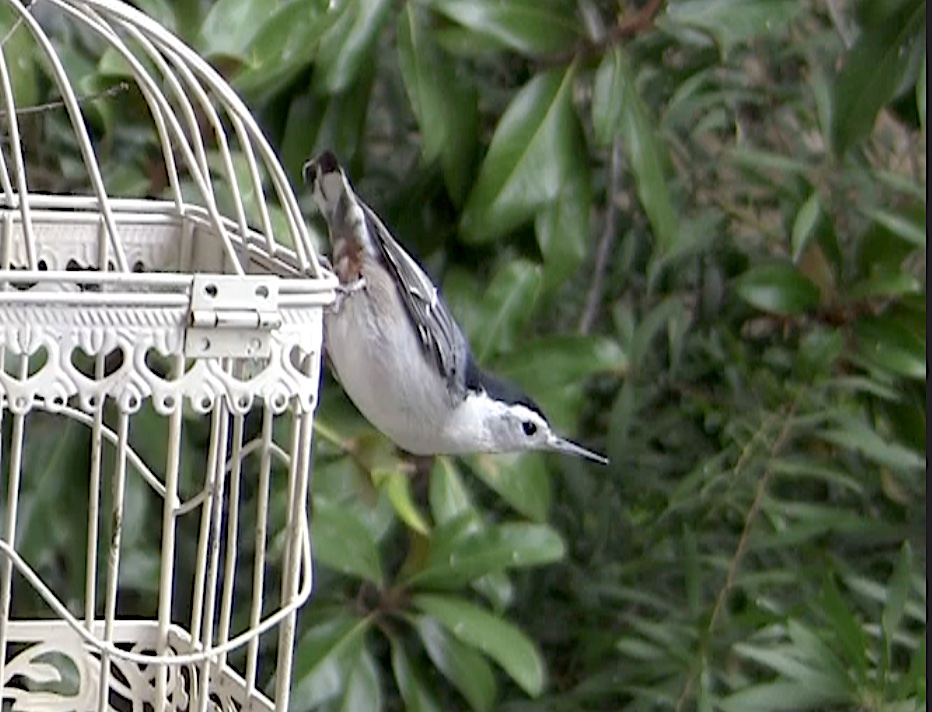
White-breasted nuthatch perches on one of my bird cage birdfeeders
I don’t use commercial feeders; rather, homemade ones designed to be as delightful to look at as the birds that frequent them. Learn how to use feeders wisely, encourage repeat visits, and spot adorable fledglings. You’ll hear bird sounds, see fascinating footage, and discover how to identify mystery birds (even from blurry phone photos).
Uncommon Lives of Common Birds
Among the easiest to attract are finches. House finches and goldfinches are found throughout North America. Orioles also are eager feeders, and their annual arrival is a much anticipated event.
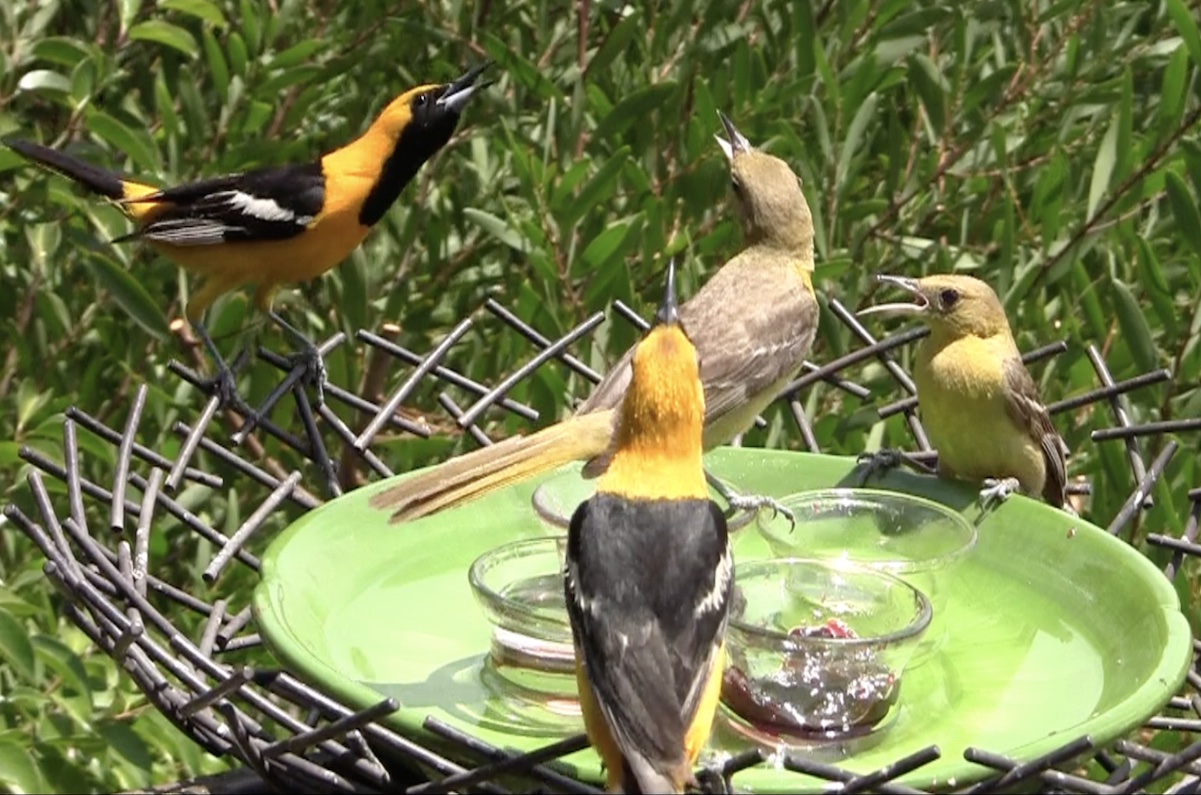
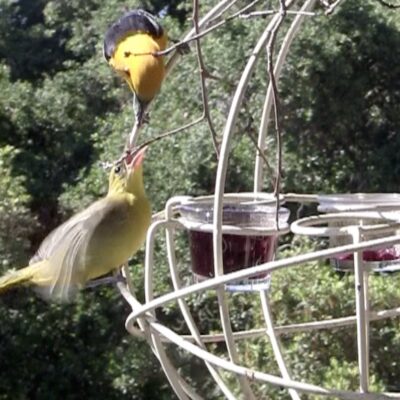
Hooded orioles migrate from Mexico and nest in fan palms. They have two broods during the summer. Paler ones are juveniles.
Once wild birds start coming to your feeders, they’ll bring their offspring. Baby birds (fledglings) are a delight. As they shadow their parents, they're clumsy, wide-eyed, and adorable.
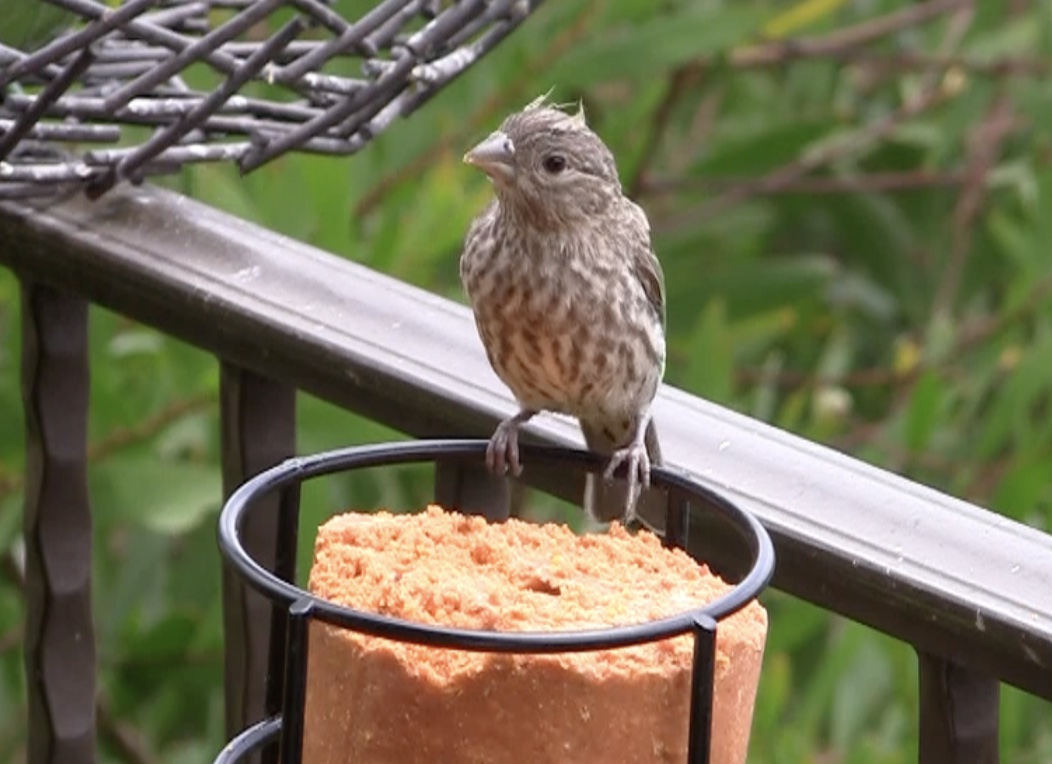
Fledgling house finch on suet feeder. Wispy feathers above its eyes indicate it recently left the nest.
Feeders vs. Flowers
I no longer bother with hummingbird feeders—which I found to be messy, sticky, ant-attractors. If not kept impeccably clean, they can spread fungal diseases that make birds sick.
I prefer to grow tubular flowers that attract hummers, like aloes and echeverias. Plant them so they’re visible from your windows, and enjoy watching hummers visit daily, year-round.
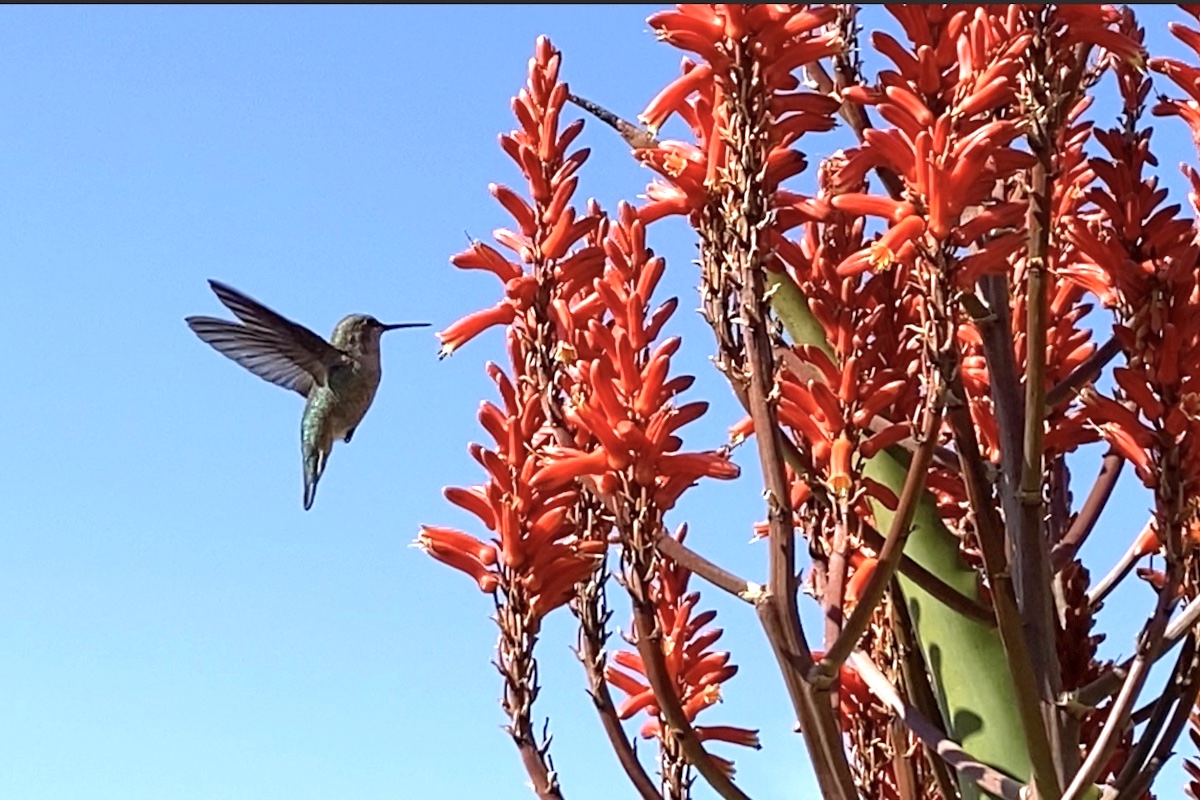
A male Anna's hummingbird gathers nectar from Aloe vaombe.
In my opinion (I have "the Sunset aesthetic"), commercial bird feeders are eyesores. Plus they tend to be expensive and hard to clean. Not to mention it's so easy to make your own!
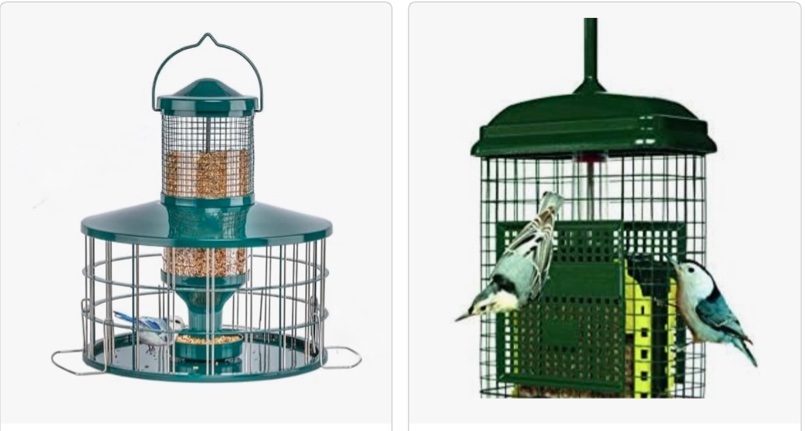
Commercial feeders, two of many examples
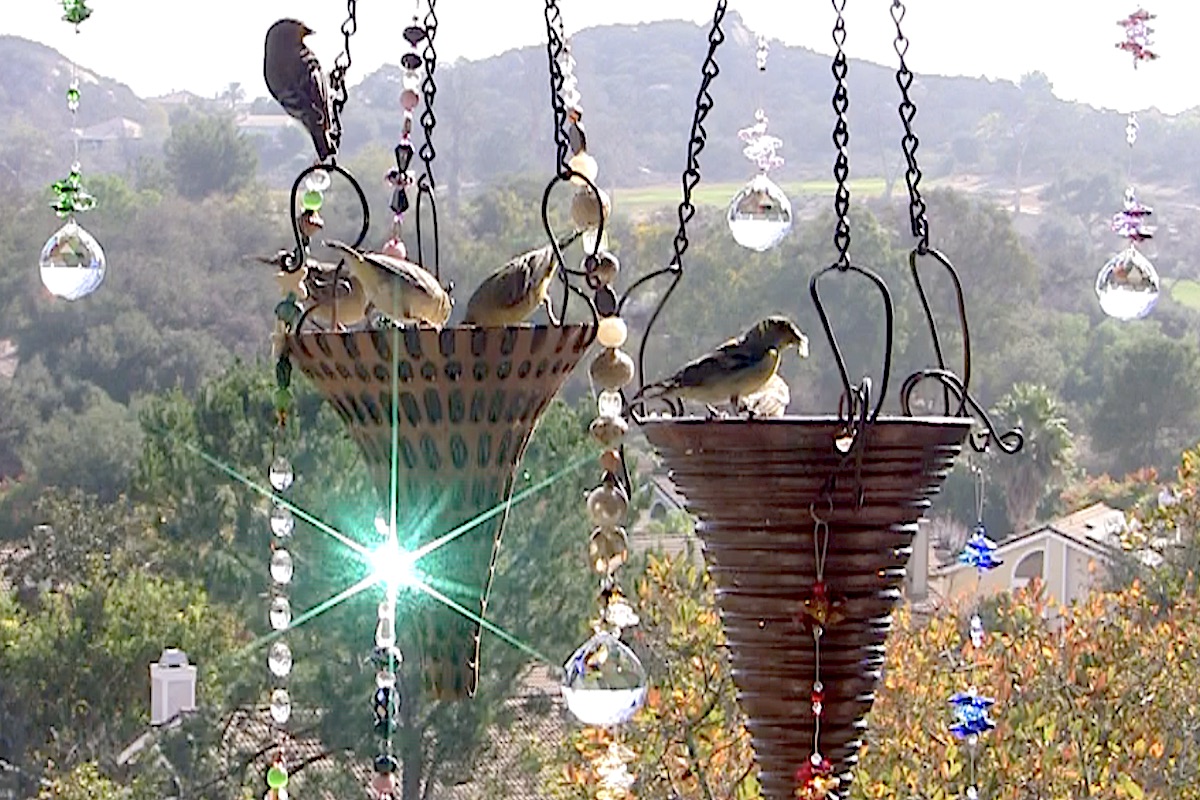
All you need are something that hold bird seeds, and hooks and chains for hanging it. Compare the commercial feeders above to those below, which I made using ceramic flower pots by a local artist. Each holds a saucer of birdseed. To catch the morning sun, I added prisms.
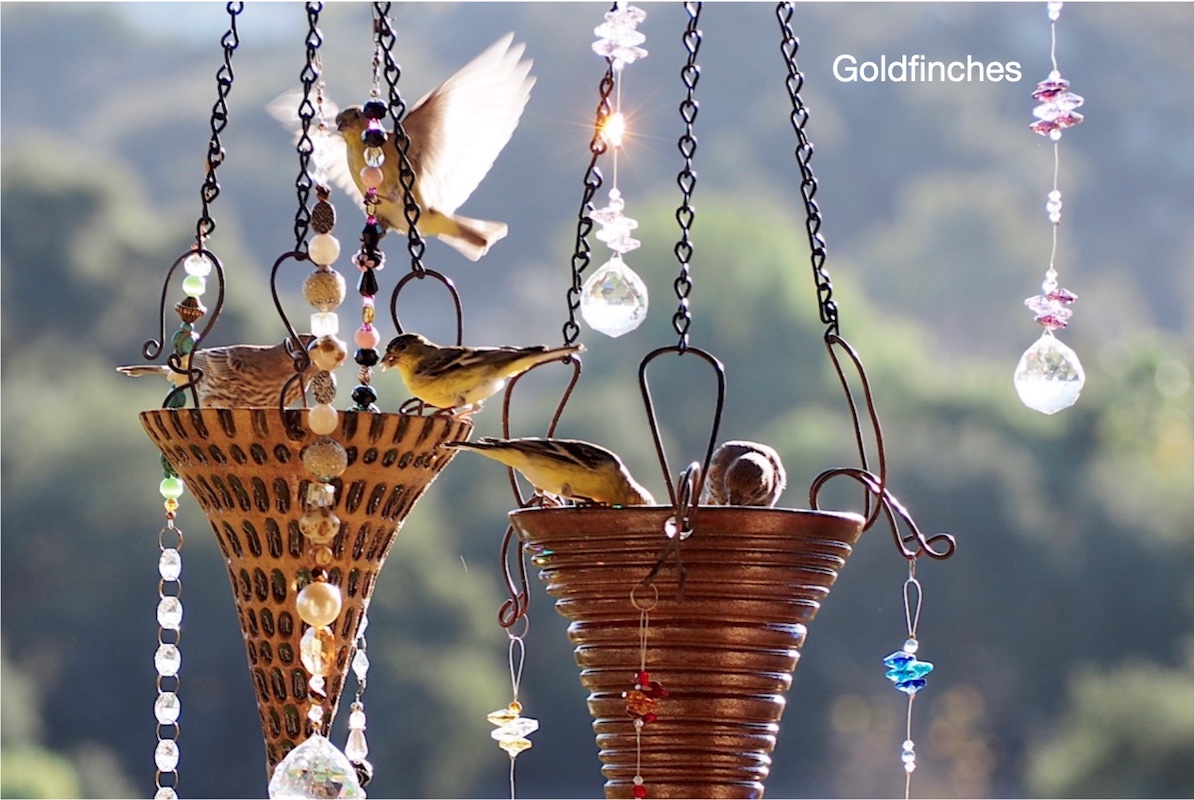
On my east-facing deck, finches and prisms sparkle in morning sun.
Creative Bird Feeders
After experimenting with repurposed objects for feeders for several years, I've decided that ornamental bird cages—with space for glass votive cups to hold seed, suet, or jelly—are ideal. Wires spaced about an inch apart let in finches and other small birds while keeping larger birds out.

Bird-cage bird feeders hang above my deck, outside the kitchen window.
Birdcage bird feeders hang from eaves, just off the deck outside my kitchen window. On Amazon: Bird-cage birdfeeder, 10” diameter x 16.5” tall.
The feeder on the left has shelled raw sunflower seeds in glass votive cups. I elevated the cups for better viewing in a thrift store candleholder that I spray-painted white. The one on the right has black sunflower seeds in the shell, which titmice prefer.
People who visit are intrigued when they see wild birds voluntarily enter and exit cages. It never gets old!
Smart Birds
Scrub jays are especially persistent—yes they’re beautiful, but also bold and smart. I tried deterring one from eating other birds' favorite food* with a hose, but it simply shook off the water.
*Hot pepper suet cylinder from Wild Birds Unlimited. See Resource List below.
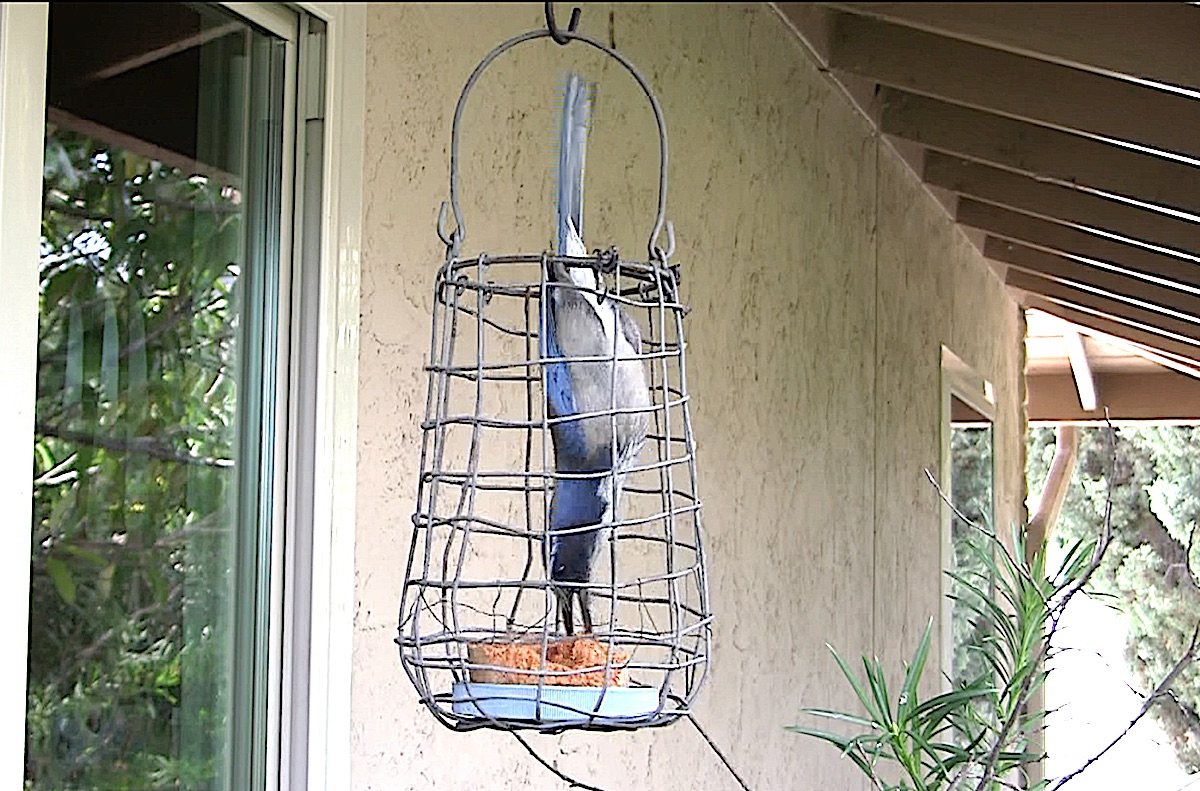
A determined scrub jay solves the Puzzle Feeder.
That inspired me to see how long it would take jays and other birds to get to food, if I made it more challenging for them. So I created a Bird Puzzle Feeder with suet and raw peanuts in a barrel-shaped wire basket.
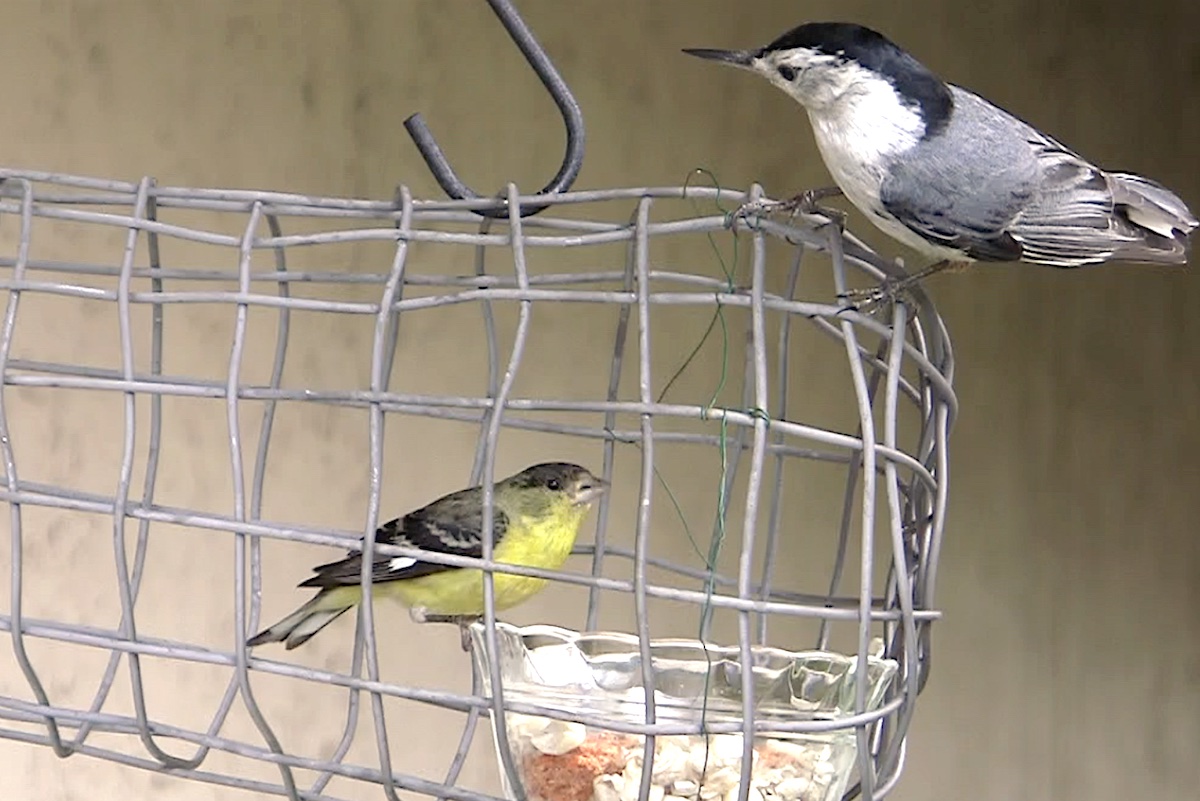
Nuthatch and goldfinch at the Puzzle Feeder
Finches and titmice solved the puzzle fairly easily, orioles took a little longer, and a sweet little nuthatch was the slowest, but finally figured it out.
Seasonal Changes
Nesting begins in late winter, so it's helpful to supply materials like coir (coconut fiber). You may have noticed birds will take it anyway if you have plants in fiber-lined hanging baskets.
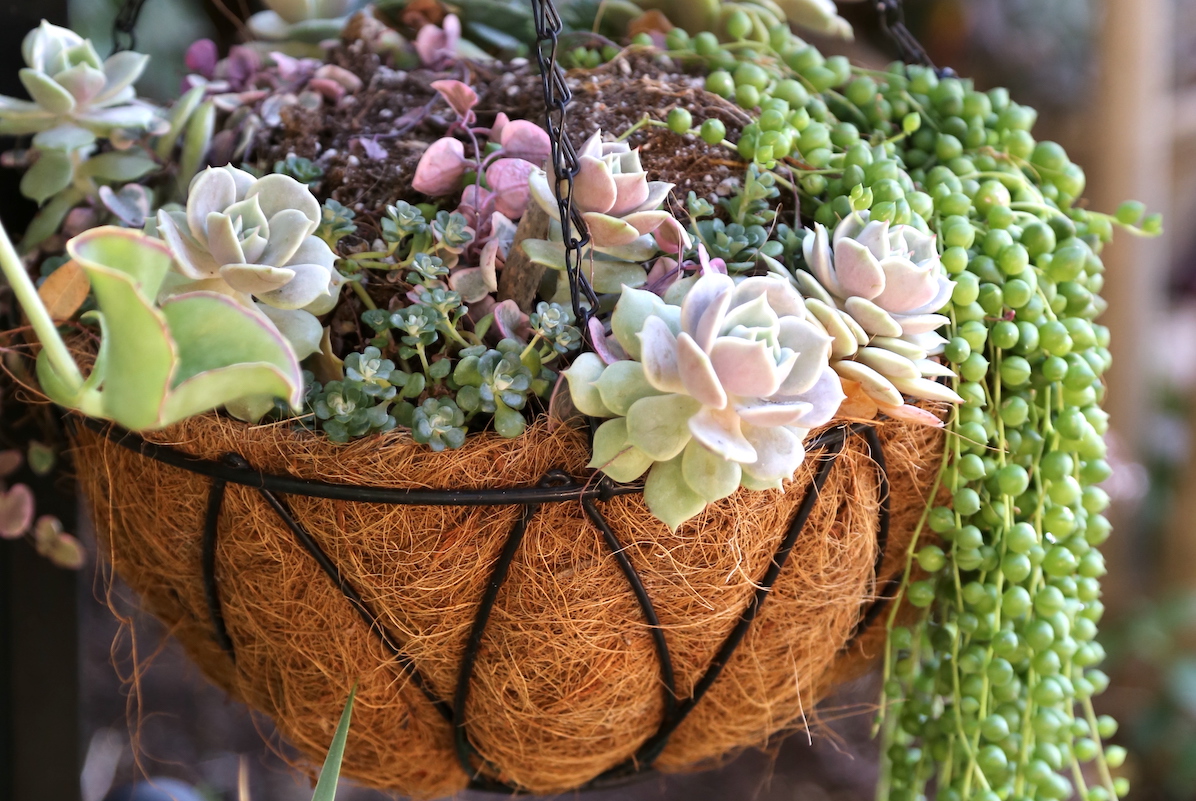
Hanging basket of succulents with coconut fiber liner
From spring into summer watch for fledglings, which peak in May and June. Although adult-sized, they're easy to spot because they cheep incessantly at their parents, which they hotly pursue.
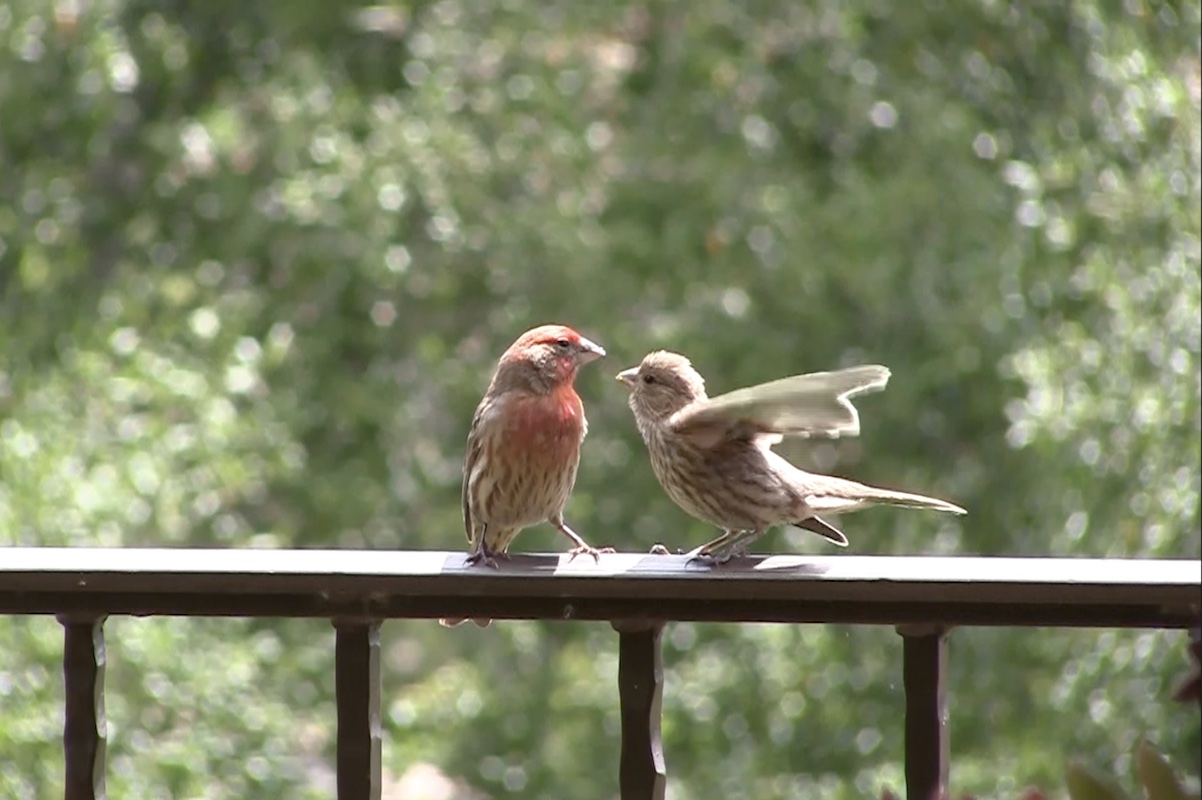
Fledgling house finch begs its father for food
Mom and dad show fledglings how to use the feeder, but the babies flutter, cheep, and gape for food regardless. Parents literally shrug their shoulders and give in, but not in resignation---rather, regurgitation.
Shorter days and colder temps bring white-crowned sparrows. They’re ground-feeders that clean up fallen seeds, as do quail, doves and wrens.
Enjoy "Your" Birds
It’s counterintuitive, but a birdwatcher needn't be quiet. Birds don’t pay much attention to noise. However, they'll scatter at even the slightest movement. After all, their biggest fear is being snatched by a silent predator—a hawk or cat.
A smart birdwatcher knows how to freeze in place or sit still until she's no longer considered a threat. That takes five or ten minutes, but then magic happens. Even though you think you’ve seen everything, you may notice---as I did recently---the unprecedented: a flock of munias at my fountain.
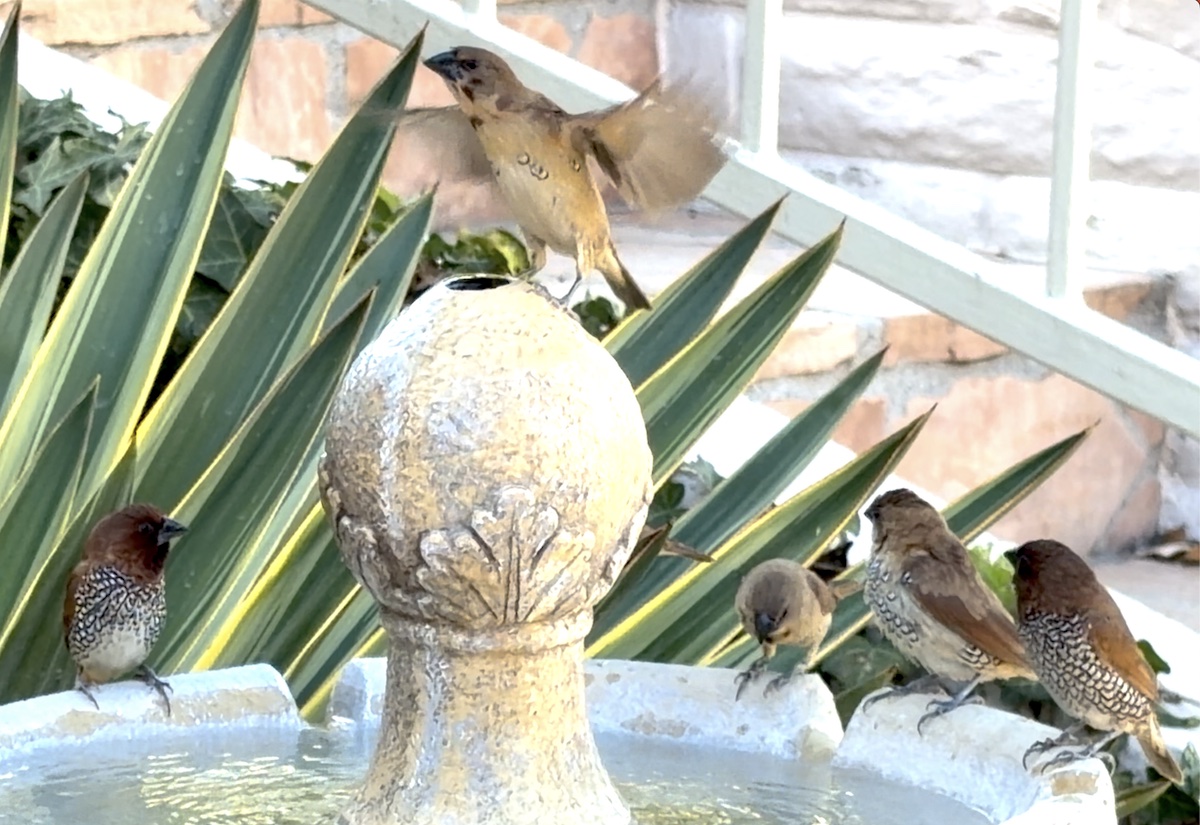
Scaly-breasted munias, originally from Southeast Asia, have naturalized in parts of California. They prefer being near water.
Discourage nocturnal pests like mice and rats with metal cones around access points such as tree trunks, table legs, or patio supports. Feed birds early in the day and if possible, bring feeders in at night. I clean and fill mine so they’re ready to go outside the next morning.
Here in inland San Diego county, tree squirrels---the bane of bird-feeding enthusiasts---have yet to be a problem. But before you envy me, consider: We do have ground squirrels. These cute pests undermine our stone steps, terraces, embankments, and--even as I write this---are probably eyeing my home's foundation.
Cleanliness and Safety
While bird droppings may not bother you any more than a diaper pail once did, guests may find them gross. Once or twice a week, and right before company comes, I soften droppings with a hose, then blast them away. I spot-clean floors, perches and railings with damp paper towels.
As for the feeders outside my kitchen window, droppings and seed husks disappear into ivy below. Which reminds me: If you set mouse traps, check them at dawn to avoid accidentally killing ground-feeding birds. (Yes, that happened once, and to this day I feel awful about it.)
Birds Love Water
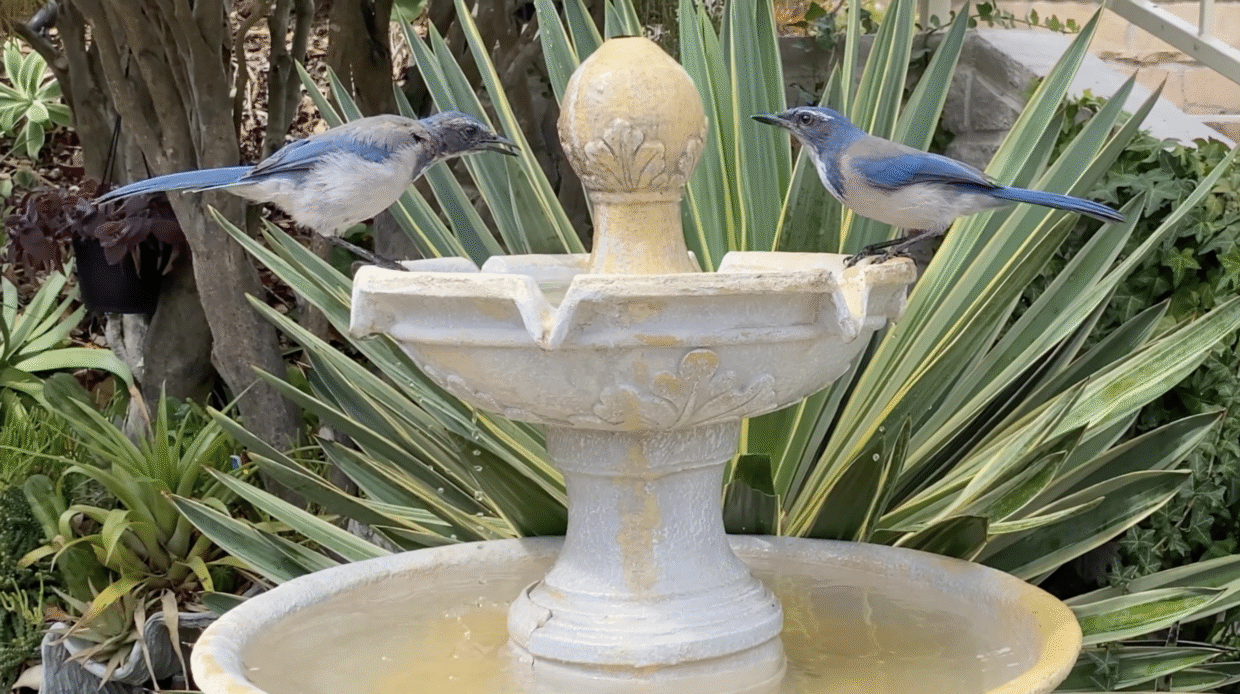
Birds appreciate a water source---a birdbath or fountain that provides water for drinking and bathing. Most find dripping or bubbling water irresistible. Water also attracts species that don’t frequent feeders, such as woodpeckers, robins, and bluebirds. We even had a raven visit.
Don’t waste your money on Frisbee-sized solar-powered floating fountains for birdbaths. They need to be in full sun to work, and birds won't go to an exposed birdbath. Birds avoid being vulnerable, especially when wet (which makes it harder to fly fast). The water sources they prefer are near trees and shrubs.
Bird House Placement and Nesting Preferences
Nesting birds are territorial and want their own air space, so I don’t place birdhouses near feeders. The elevation of the box and its entry hole size matter; every species has its own requirements. Holes that are too large---typical of ornamental bird houses---can allow predators like crows to grab hatchlings.
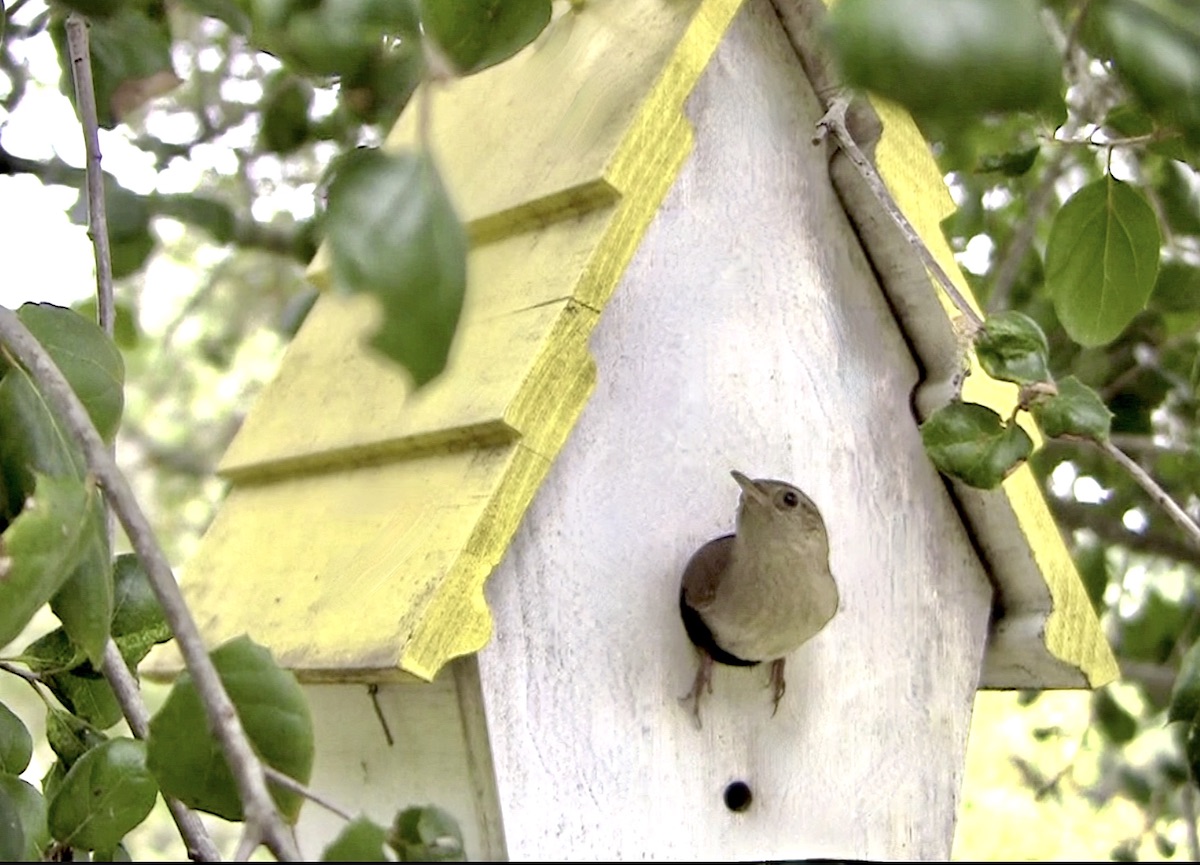
Bewick's wren leaving birdhouse
Doves will nest in hanging baskets or amid tangled tree branches, as do jays. Orioles use fibers from palm fronds to weave hanging nests in tall palm trees.
I purchased a nesting box for bluebirds, but despite their fondness for my fountain, they’ve yet to use it. Titmice nested in the box for a few years but now prefer a hole in my coast live oak. Wrens also are cavity nesters that will use bird boxes. House wrens, thankfully rare in this area, will evict Bewick’s wrens, fledglings and all. Not nice.
Urban proximity increases the likelihood of attracting bullies such as starlings, grackles, blackbirds, and crows. I’ve not had issues with those, so I can't advise how to discourage them.
I do know that smart birds like corvids (jays and crows) are a mixed blessing. They're amazing in their own way, and are trainable. Friends who hand-feed scrub jays are quite fond of "their" birds. And in another video in my YouTube bird series---the one about identifying fledglings---I tell the story of "Francesca" the crow, who became a friend, sort of, and proudly brought her fledglings.
Debra’s Backyard Bird-Feeding and -Watching Essentials
Before buying food or nesting boxes, find out what your avian visitors prefer. What works for one species may not for another.
Commercial seed mixes are convenient but typically contain cheap fillers like corn kernels and millet, which is why I buy only what each bird likes (see chart at end).
- Merlin phone app: https://merlin.allaboutbirds.org
- Binoculars https://amzn.to/4kcpkR6 (or use the zoom on your phone)
- Feeders, make-your-own: thrift shops, Home Goods, Hobby Lobby
- Nesting material holder, Wild Birds Unlimited https://order.wbu.com/carlsbad
- Coconut fiber (coir) https://amzn.to/46btbrU
- Hooks and chains to hang feeders: Ace Hardware, Wild Birds Unlimited
- Debra's bird-cage birdfeeder, 10” diameter x 16.5” tall, https://amzn.to/45FXG9b
- Debra's garden fountain, https://amzn.to/4654JZ2
- Birdhouses for cavity-nesters (like wrens and bluebirds): Wild Birds Unlimited.
- Raw peanuts (in-shell or shelled), local feed stores
- Raw shelled sunflower seeds & chips https://amzn.to/4rq4no9
- Black oil sunflower seeds in shell (a titmouse favorite) https://amzn.to/3ZIqEBI
- Grape jelly for orioles: any food market
- Millet for doves and quail, found in seed mixes for small birds or: https://amzn.to/4q9zEL4
- Hot pepper no-melt suet cylinders: Wild Birds Unlimited, $15
Favorite Bird Books
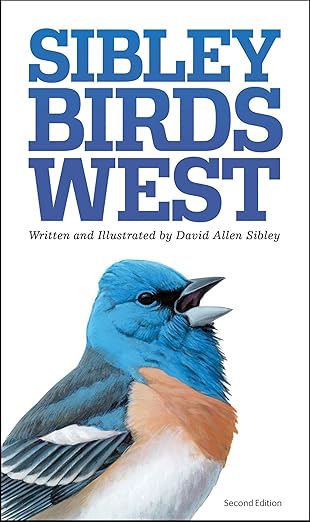
Sibley's is a must-have for IDing birds based on appearance, calls, season, and range.
Sibley Field Guide to Birds of Western North America, https://amzn.to/3McfUZg
Baby Birds: An Artist Looks into the Nest, by Julie Zickefoose, https://amzn.to/3ZrnYsd
What It’s Like to Be a Bird, From flying to nesting, eating and singing, by David Allen Sibley: https://amzn.to/4koSv3v
Sunset’s Illustrated Guide to Attracting Birds: Bird identification, plant lists, feeders, houses and baths https://amzn.to/4kmeN5P
Rare Encounters with Ordinary Birds, by Lyanda Lynn Haupt https://amzn.to/4bE2OhR, and other books by Haupt, including Urban Bestiary: Encountering the Everyday Wild; and Mozart’s Starling
Backyard Bird Chronicles, by Amy Tan https://amzn.to/4kocr6H
"My" Birds and What I Feed Them
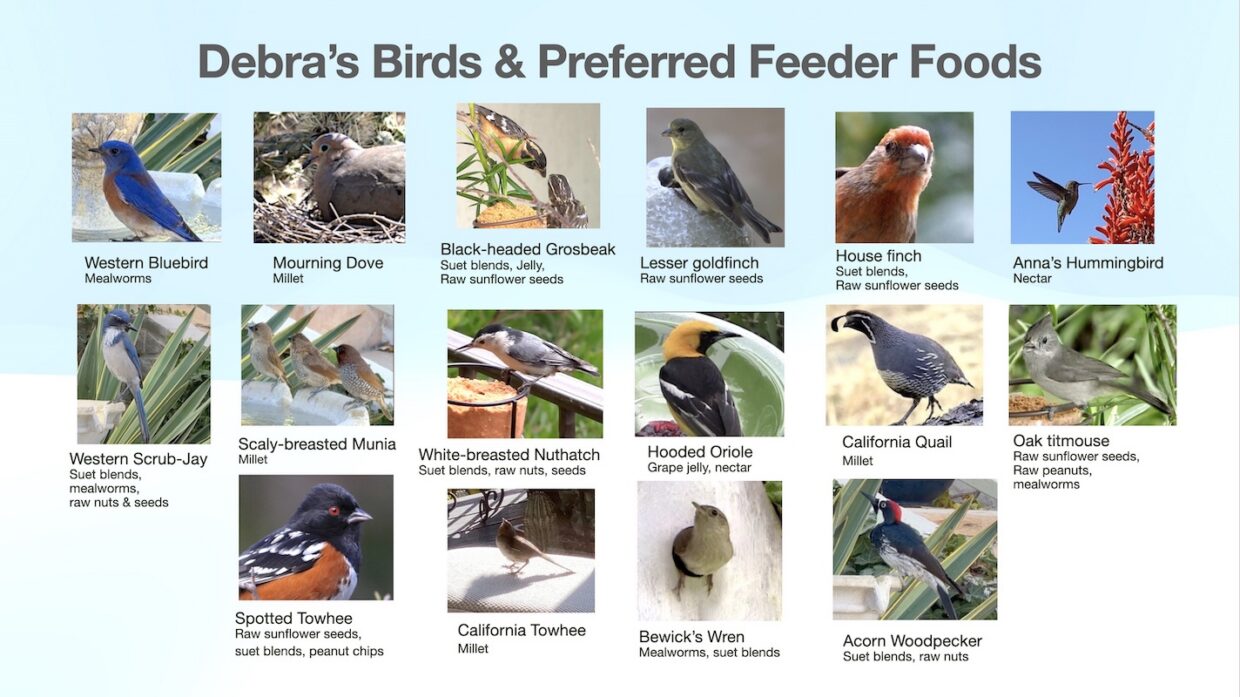
16 CA backyard birds and what I feed them.
For additional info and links to my YouTube bird videos, type "birds" in the search bar at https://debraleebaldwin.com. Or go to my YouTube channel's Birds playlist.
See Baby Birds (Fledglings) at Feeders
Fledglings are toddlers of the bird world: cute, endearing and fun to watch. They’re awkward, curious, beg loudly, and don’t let their parents out of their sight. You’ll see nine different types of western birds shortly after they’ve left the nest. Look for these flying jewels in your own backyard. I show parents and offspring at unconventional feeders
Hi Debra Lee! I so enjoyed this article, what great photos! I first spotted the scaly-breasted munias at my bird baths last year and was excited to see them here in your article. They were new to me in La Mesa, after 40 years of bird watching. It took a while to track them down in my Sibley bird book. it’s always fun to make an identification! Happy gardening.! 🙂
Hi Brenda, It’s amazing how they’ve spread. It’s been about three years since a friend spotted them at her waterfall and pond in Vista. Then I saw them at Discovery Lake in San Marcos. A month ago, I saw them at my fountain and thought…could it be? They sure are cute, but I’m leery about non-natives. They’re usually not good news—tend to crowd out native birds. It would be great if they turn out to be polite and inoffensive!
Hi Debra, This is such an informative and helpful article…. I think it will be of great interest to your gardening friends. I first spotted Munias in my Old Town San Diego garden in December of 2020 and they’ve been regular visitors ever since.
Munias in Old Town! Interesting…I thought they were only in the backcountry. Pretty soon we won’t be able to see the sky for all the munias, LOL.
Hi Debra , I really enjoyed the idea of making my own bird feeders. Thank for the inspiring ideas!
I’m so glad you enjoyed it, Chris. Making your own bird feeders is so easy. We tend to think we’re not going to do it right, because we assume there’s some magic to fabricated feeders. And maybe there is, when it comes to being designed to keep out tree squirrels. Hopefully you don’t have them in Florida. Only iguanas and alligators, right? LOL