
Plants & Varieties
Why You Need to Know Where Succulents Come From
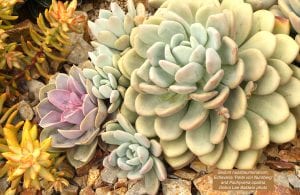
Can you grow saguaros in Tucson? You bet! In California, probably not. The secret to happy succulents is to duplicate their native growing conditions as much as possible. The more you know about where a succulent comes from, the easier you can do this…up to a point. Occasionally (not often) it’s nearly impossible. No matter…
Read MoreAgaves Handle Summer Heat
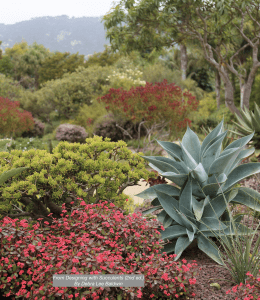
Late summer is when tough succulents really shine. Large agaves handle summer heat, and are unfazed by harsh sun, high temps and lack of rain. Their statuesque, fountainlike forms lend a sculptural element to any landscape, and contrast beautifully with fine-textured ornamentals. They also make good firebreak plants and security fences. With the exception of a few…
Read MoreSucculents Grown for Bright Flowers: Kalanchoe blossfeldiana
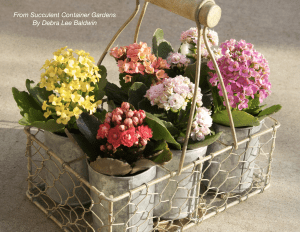
Supermarket kalanchoes (Kalanchoe blossfeldiana) are succulents you grow mainly for their flowers. They have been hybridized and sold as flowering plants long before succulents in general became popular. Succulents are plants that look like flowers, and although all succulents produce them, they’re generally not the reason people buy them. Yet this one succulent has been commercially…
Read MoreMake a Gift Basket of Blue Echeverias
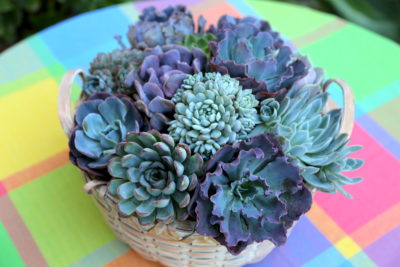
Is any plant lovelier than a ruffled echeveria? These rosette succulents are soaring in popularity, and new cultivars are being introduced all the time. Don’t miss my YouTube series featuring renowned echeveria hybridizer and grower Dick Wright.
Read MoreWhich Aloes Are Best for Your Garden?
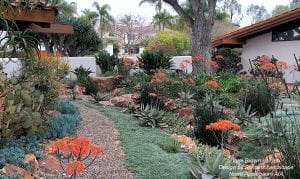
One of Southern CA’s in-demand landscape designers, Bill Schnetz of Schnetz Landscape, Inc., likes to use aloes of all sizes in residential gardens. If you love succulents, live in a mild climate, and grow these South Africans in soil that drains well, “they’ll soon become your favorite plants,” Bills says. For a natural setting, he suggests…
Read MoreShowy Succulents for Snowy Climates (Debra’s WSJ Article)
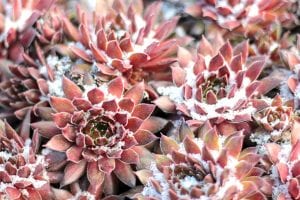
Showy Succulents for Snowy Climates This is the unabridged original of the article I wrote for the Wall Street Journal. Snow heightens the color of hens-and-chicks (Sempervivum globiferum ‘Connie’). Photo: Mountain Crest Gardens Is it a given that Northerners can’t grow succulents? Not at all. Granted, most of these moisture-storing, arid-climate plants prefer warm, sunny habitats.…
Read MoreSpring in My Succulent Garden
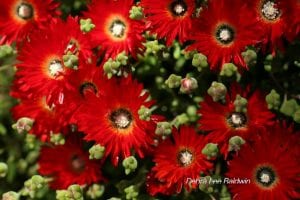
See numerous low-water flowering plants that thrive with minimal care in my Zone 9b Southern CA garden. My spring garden’s most vivid blooms are those of succulent ice plants. Aloes, bulbine and numerous arid-climate companions are bright and beautiful from March through mid-May. Increasing temps tend to put the kibosh on delicate spring flowers. If…
Read MoreEcheverias from Altman Plants
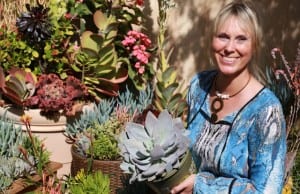
New Succulent Plant Introductions Let’s say you’re in the nursery business and can crossbreed popular succulents so their offspring combine their parents’ most desirable traits. What would you aim for? That’s what I found out on a recent visit to Altman Plants, the largest grower of succulents in the US. I was there to photograph Altman’s spring succulent introductions—new beauties…
Read MoreNo-Water Succulents for Southern California Gardens

Above: I based one of my most popular videos on the agave section of my bestselling book, Designing with Succulents. Both explain what you need to know to select and grow agaves successfully, and both show those best for gardens, close-up and in-ground. Some agaves are hardy to 15 degrees or less! And when small,…
Read MoreLophocereus schotii (Totem Pole Cactus)
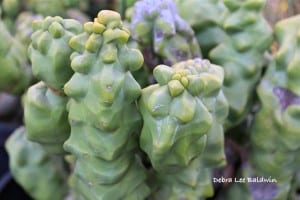
Succulent expert Don Newcomer showed me a rare columnar, spineless cactus from Mexico: Lophocereus schotii (totem pole cactus). It can be chubby and lumpy, tall and skinny, or columnar and spiral-forming. Lophocereus (Pachycereus) schotii has spines. The monstrose form has club-shaped trunks with spineless protuberances. There are three monstrose varieties: fat (obesa), spiral (spiralis) and skinny or totem…
Read More